The Biological Hack for Your Attention: Using NSDR to Reclaim Your Human Agency
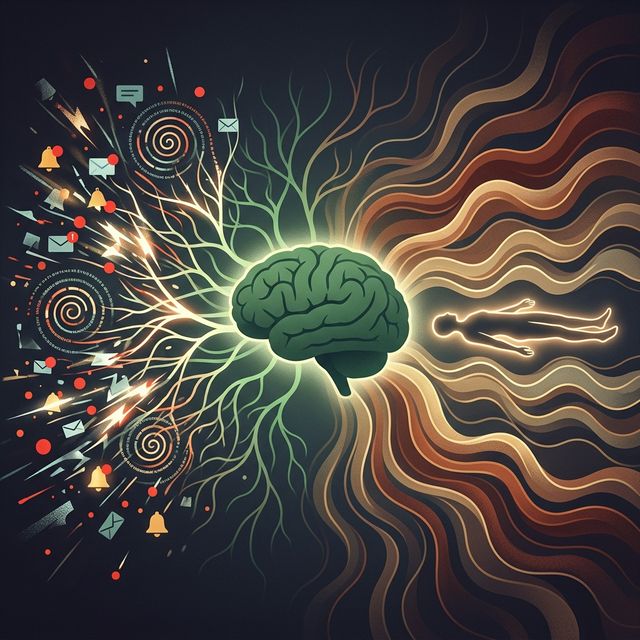
In the 21st century, the most contested territory on Earth isn't a plot of land or an oil field — it's the six inches of space between your ears. As historian Yuval Noah Harari warns, we have entered the age of “human hacking.”
Sophisticated algorithms are meticulously designed to bypass your conscious mind and swipe your “attention credits” before you even realize they're gone. If you want to stop being a “hackable animal” and start being the architect of your own life, you need a high-performance tool to protect your assets. That tool is NSDR (Non-Sleep Deep Rest) — a science-backed protocol championed by neurobiologist Dr. Andrew Huberman.
The Problem: Your “Attention Currency” is Being Stolen
Harari points out that every time you mindlessly scroll, you aren't just looking at a screen; you are spending your life force on someone else's bottom line. This constant digital pull creates a state of “high alertness” that keeps your nervous system frazzled and your focus fragmented.
To spend your currency on the things that actually matter — your relationships, your health, and your purpose — you need a way to reset your brain's operating system.
The Process: How NSDR Acts as a “System Reset”
NSDR (often referred to interchangeably with Yoga Nidra) is a simple protocol that uses biology to reclaim your focus. Here is how the “Huberman” approach helps you fight the “Harari” hack:
1. The Parasympathetic Toggle
Most of the day, the world keeps you in a state of sympathetic “alertness” (stress). NSDR uses specific breathing and body-scanning patterns to flip the switch to your parasympathetic nervous system (recovery).
2. The Dopamine Reset
Our devices “hack” us with tiny hits of dopamine that keep us hooked, creating “neural clutter” that makes deep work impossible.
NSDR allows your brain to enter a state where dopamine can replenish. It's like clearing the cache on your browser so the whole system runs faster and cleaner.
3. Targeted Neuroplasticity (The Sankalpa)
In the deep, semi-lucid state of NSDR, your brain enters a state of high neuroplasticity — it is primed for change. This is where you use a Sankalpa, or a clear, positive intention.
While the world tries to program you with advertisements, you use this biological window to program yourself with your own goals.
The ROI: Why This Is the Ultimate Power Move
If attention is your currency, NSDR is the vault where you keep it safe.
| The “Hacked” Human | The NSDR Human | |
|---|---|---|
| Mode | Reactive: Guided by notifications | Proactive: Guided by internal intention |
| Energy | Drained: Always tired but “wired” | Recharged: Uses Deep Rest to fuel focus |
| Attention | Fragmented: Split 100 ways | Integrated: A sharp, usable tool |
How to Reclaim Your Agency Today
You don't need a yoga retreat to start. You just need 10 to 20 minutes and a quiet place to lie down.
- Find a Guide: Search for a “10-minute NSDR” or “Yoga Nidra” track online — or use Kosha to generate a personalized one.
- The Action: Lie still and follow the “body scan” — moving your awareness from part to part as directed.
- The Intention: As you drift into that deep state, briefly remind yourself of one thing that truly matters to you.
Ready to reset your operating system?
Kosha generates personalized NSDR sessions tailored to your mood and intention — so you can spend your attention on what actually matters.
Start a Session